
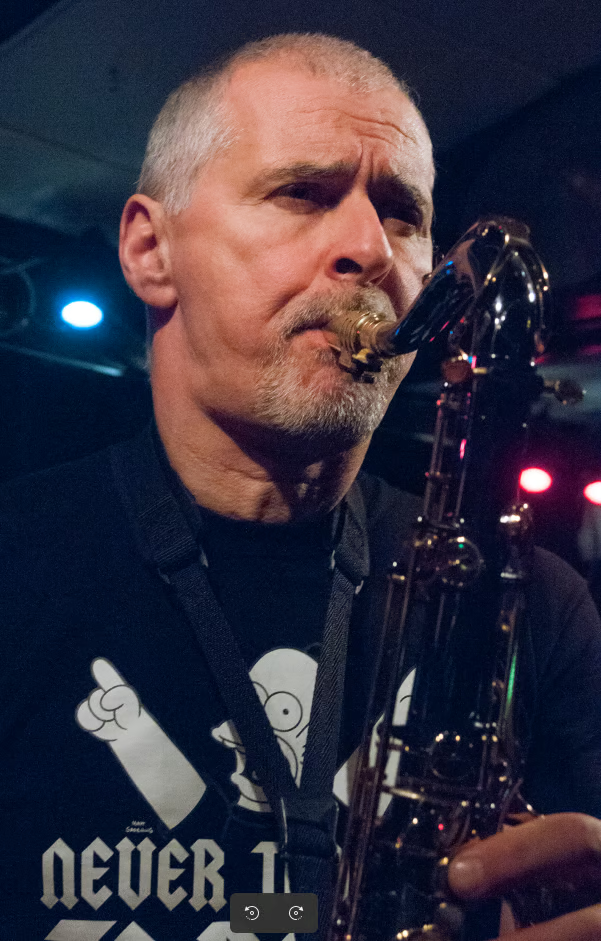

Piftemaen is a musician from Stavanger, Norway, and the name itself tells you something about who he is. In the local dialect, piftemann means the man with the whistle, a word with connotations of someone outspoken and unwilling to stay quiet about things that matter. That description fits the artist behind the name closely. He spent decades making music without ever committing to it full time, choosing instead to work in carpentry to support his family while continuing to play in bands, contribute to recording sessions, and develop his sound on his own terms. That distance from the commercial side of music gave him something most full-time artists never get: complete creative freedom.
He has spoken openly about how that freedom allows him to say things in his music that a career-minded artist might think twice about. His collaboration with cellist and vocalist Caroline Lavelle produced some of the most distinctive work of his earlier career, including a version of The House of the Rising Sun that found real traction. He recorded for a time under the name Jake’s Jacket, but the Piftemaen identity is now where all of his energy is focused. On this single, Michael Horton plays guitar, while Piftemaen handles saxophone, vocals, and additional instrumentation. Cover art comes from Lena Kristin Bru Sondervik. An album is in progress, with plans for a live band and touring to follow.
2060 or So – Short Version
This song started as a nine-minute piece with four full verses. Cutting it down was a conscious decision, and not just a practical one. If the argument is that people and governments refuse to think past the immediate future, then making the song shorter to fit how people actually listen in 2026 is a choice that reinforces the point rather than contradicting it. What remains after the cut is enough to land the message without wearing out its welcome.
The sound here is a sharp departure from the more ambient side of Piftemaen’s earlier work. The track moves in classic rock territory but with a jazz sensibility running underneath it, mostly through the saxophone, which does considerably more than decorate the arrangement. Piftemaen has described the instrument as his real voice, and that comes through clearly here. It carries emotion across the track in a way that the lyrics alone could not, shifting between something almost conversational and something that sounds genuinely alarmed depending on where the song is. Michael Horton’s guitar playing gives the whole thing a solid backbone without ever pulling focus from the saxophone or the message. The production has enough grit to feel lived-in without sounding unfinished.
Lyrically the song is about the gap between where humanity is heading and where it needs to go, written from the perspective of someone who has been paying attention to this for a long time and is tired of watching it be ignored. Piftemaen has been engaged with environmental issues since his teenage years, and that history gives the song a credibility that a younger artist writing about the same subject might struggle to match. Importantly, the track never collapses into either pure despair or hollow optimism. It sits somewhere in between, which is actually the most honest place to be when writing about something this complex.
Final Thoughts
There is something worth paying attention to when a musician who spent fifty years doing this on the side, without chasing recognition or commercial success, decides the time has come to say something loud and clear. That context gives this track a weight that is hard to manufacture. Piftemaen is not performing concern about the future. He has been living with it for a long time, and this song is what that looks like when it finally has to come out. One of the more honest things we have heard this year.
What did you think of the single? Stay tuned to MusicOnTheRox.com for all your music news and reviews.
Want a review like this?
Send us your release and our editorial team listens to every one. Every submission is also considered for the Music On The Rox Spotify playlist, at no extra cost.


