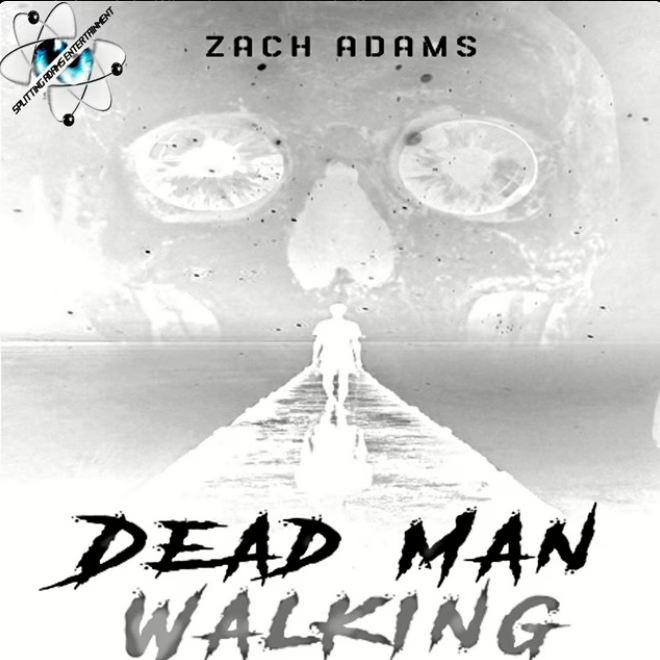

Zach Adams is an Alaskan writer and musician who builds worlds with words and sound. Dead Man Walking was released August 1, 2025, and appears as a twelve-song record that doubles as the sonic companion to his horror fantasy novel of the same name. The album is self-produced and issued through his Splitting Adams Entertainment imprint. It blends alt-rock, progressive textures, and cinematic atmospheres, and it reads like a deeply personal project that also wants to be immersive for listeners.
Track by Track
Dead Man Walking (Final MIX)
The title track is an attention grabber that opens with a steady sense of doom and purpose. The arrangement breathes slowly at first, then tightens like a noose around a memory. Adams sings with gritty focus, and the chorus cracks open into a big, theatrical hook that feels as much like a proclamation as a confession. It sets the tone for the record: cinematic, confrontational, and strangely intimate.
…When Wishing Still Helped One
This song feels like a memory of simpler magic, the kind you keep in a pocket and bring out on bad nights. The verses move carefully, the melody folding in on itself as the lyrics wonder about faith and small miracles. The production keeps it lean so the sentiment lands fully, and the final refrain swells with a bittersweet tenderness that is hard to shake.
Drown
Drown is muscular and honest. It uses water as both image and emotion, and you can feel the tide pulling under the vocal. The instrumentation is agile, shifting from claustrophobic verses into a cathartic chorus. This is the track that wears pain on its sleeve while still searching for release.
They Want You to Be Afraid!
There is a jolting energy here, equal parts satire and threat. The arrangement leans on sharper synth textures and a driving beat, making the lyrics read like a warning shouted into a very loud room. It is theatrical and angry in the best possible way, a song that refuses to let you stand comfortably on either side of the argument.
Gelatin Skeleton
This track is delightfully strange and tender at once. It balances odd imagery with a warm melodic center, conjuring the sense of being fragile and alive. The music bounces in unexpected places, and the vocal takes on an almost conspiratorial softness that pulls you in. It feels like a short story set to music.
Petrichorus
Petrichorus opens like a breath after rain. The soundscape is textured and small details; soft percussion, metallic taps, a distant guitar line make the song feel tactile. The lyric remembers scent and moment, and Adams delivers it like a private blessing. It is one of the album’s quieter, more beautiful moments.
Becoming Hollow (Am I?)
This is the record’s most introspective cut, a slow unpeeling of identity. The vocals occasionally cracks in exactly the right places, and the music pulls back to give the words room. It is, honestly, an aching meditation on what we lose when we hold on too tightly, and it lands with a kind of weary grace.
The House Always Wins
This track carries a bitter humor beneath its hard edges. The beat simmers and the guitar attacks in pitch-perfect moments. Lyrically, it reads like a ledger of small compromises, the things we hand over to systems and routines. The chorus hits like a cynical hymn, and it sticks with you because it rings true.
The Last Light in the Universe
There is a lonely, gorgeous quality to this song. It feels like standing on a rooftop at dawn and watching the horizon breathe. Adams lets the melody hang in the air, and the arrangement supports it with gentle swells. It is one of the album’s most affecting moments because it holds both fear and a quiet acceptance.
Apocalypsis, Pt. 1
The first part of Apocalypsis is an instrumental doorway. It unfolds slowly, building tension through repeating motifs and small percussive hits. It functions as a cinematic pause, and it prepares you for the emotional and sonic release that follows in the second part.
Apocalypsis, Pt. 2
Where part one prepares, part two resolves and ruptures. The music comes in larger, louder, and the emotional stakes feel higher. Guitars and synths weave through each other until the arrangement collapses into a cathartic finale. It feels like a finale written as a fight and a surrender at once.
Phantom Love (Final MIX)
The closer returns to intimacy even after the cataclysm. Phantom Love moves like a soft afterword, the kind of song that holds grief and tenderness in the same palm. The vocals are fragile but steady, and the melody winds toward a gentle, imperfect peace. It is a closing that does not tidy everything, and that is exactly why it works.
Final Thoughts
Dead Man Walking is ambitious and unflinching. Zach Adams uses the record to tell a story and to illuminate private corners of the human heart. There are songs here built for spectacle and others that are pared down to a single honest line, and together they form a work that feels cohesive without being predictable. This is a debut that announces a distinct artistic voice, one interested in risk and in feeling fully.
What did you think of the new album? Stay tuned to MusicOnTheRox.com for all your music news and reviews.
Want a review like this?
Send us your release and our editorial team listens to every one. Every submission is also considered for the Music On The Rox Spotify playlist, at no extra cost.