
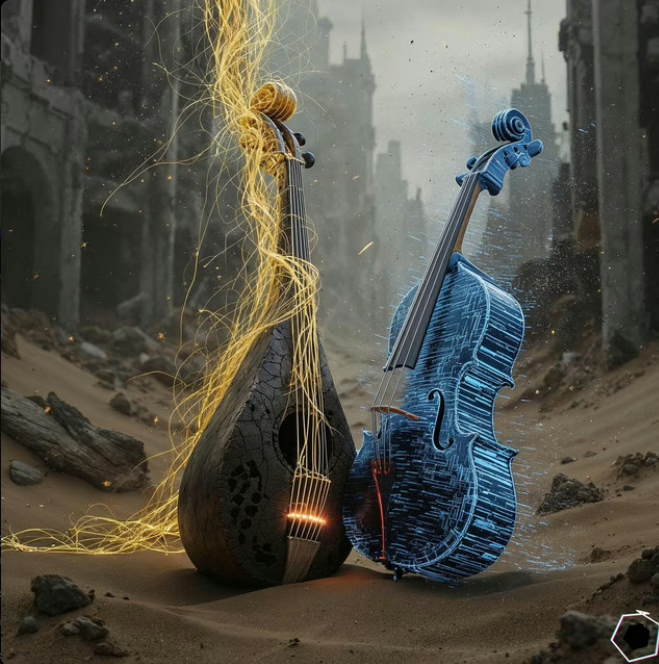

Codemachia is not just a band but a musical extension of a post-apocalyptic narrative world where people are never just characters but voices, hope, resistance, and memory. Their new album, Gladius Æternus, is a powerful soundtrack for the story of Yusuf, a spectral rebellion born from the ashes of Tombouctou-Ash and driven through the vast decay toward the depths of Alger-Index. Every track feels carefully forged to echo emotional ruin, eerie landscapes, and the determination to live beyond erasure.
Track-by-Track Review
Awakening in the Ashes
This opening track grounds you in smoldering ruins and rebirth. Sparse percussion and ghostly synths build around a whispered melody that rises cautiously as if testing the air. It sets the album’s tone, a fragile spark discovering breath in the wreckage. By the time the strings and subtle drums enter, you feel a heart that survived collapse. It is a beautiful, careful start.
The Well of Tears
Here, the sound drips and echoes, as if sampled from a cavern where pain collects. The melody flows downward while a weight presses on each note. It is a long, immersive meditation on loss and memory, pulling at the edges of grief until you believe every drop matters. It is cinematic and heartbreaking, full of a sorrow that demands our presence.
The Wall of Lies
A contrast arrives in layered dissonance and marching rhythm. The track pounds like resistance forming behind another’s deception. It builds on tension, with guitars that flake like rust and melodies that shatter the calm. It feels furious in its restraint, like shouting in code. By the end, you sense a wall trembling.
Astou’s First Fall
Delicacy weaves through here, almost as if the album whispered a memory before it sang it. Melancholy piano and ethereal pads cradle the lyric, which imagines a girl’s first fall, literal or emotional, with sorrow that feels careful. It is a moment suspended in the album’s larger sweep. You hold it in your hands like a memory etched in ash.
Dance of Broken Circuits
The music suddenly pulses with glitch and rhythm, flickering like electrical fires. It channels the fractured energy of survival, scavenging through technology and fragments of identity. The melody loops like a fractured mantra, both mesmerizing and claustrophobic. You catch yourself dancing even as you feel unsettled and drawn inward.
Poisoned Victory
Here, the sound blooms gritty and triumphant. The chord progression moves with a swagger that carries both relief and regret. The noble victory is tainted, you sense, with costs that glow in the shadows. The rhythm picks you up into what you thought was resolution before reminding you how hollow survival can feel.
Shadow Weaver
At just over two and a half minutes, this feels like an upbeat haunting lullaby. Sparse tones curl under the skin like currents tracking phantom grief. There is melody but no promise. It whispers and heals and unsettles all at once. It is brief but unforgettable, as though a ghost leaned next to your ear.
Khartoum Fever
Here, the record spikes. Percussion cuts sharper and melody rises taut, like the fever broke and everything vibrates. The song pulses with heat and memory, offering both delirium and drive. It ends breathless and charged, a moment of kinetic energy when everything might ignite.
Hathor’s Lullaby
This lullaby is dark as it is soft. Warm synths cradle the melody, but its tone trembles with sorrow and regret. The lullaby is not comforting. Instead, it is a soothing mask for deeper unrest. You feel both calm and restless as you listen, like holding grief gently before finally letting it go.
The Convergence
Strings and rhythm grow together in a pattern that feels inevitable. The sound leans into friction, clashing melody, rhythm pressing forward, and voices that feel both united and torn. It is the narrative arc meeting its axis, where everything converges before it shifts. You sense change, tension, and charge in equal measure.
Gladius Æternus
The title track strikes with ceremonial pulse. The rhythm anchors into something disciplined and ancestral. Layers rise, brass and drum meeting in a hymn to resilience. It feels almost mythic, a sonic forging of eternity from fragments and story, a vow written in echo and electricity.
We Are the Glitch
This song is titled with defiance and worn like a battle cry. The beat loops like a glitch in the human code. The melody is insistent and electric. The lyric feels like a declaration of existence against erasure, a refusal to be subsumed. It is fierce, defiant, and necessary.
Bonus: The Rejection Protocol
The band shifts tone to something taut and urgent. The rhythm tightens like machinery powering down or rebooting. The song pulses with refusal, a refusal to accept the programming or the fate. It feels like shutting one door and pushing through another. It is short, sharp, and unforgettable.
Bonus: Memories of Alger Index
At just over a minute and a half, this closes as a fragile pulsing echo. Ambient tones contour the outline of memory and finality. It is nothing more than a postscript to everything that came before, but in that gentle space, it says everything. It feels like the ending of a vision carried over too many miles and still refusing to fade.
Final Thoughts
Gladius Æternus is less an album and more an auditable map of resurrection, resistance, and memory. Codemachia constructs a world through sound, and here they solidify it: the pulses of survival, data haunting flesh, grief shaping resolve. Every track is thoughtful, atmospheric, and charged with intent. This is an album to move through, not just listen to.
Want a review like this?
Send us your release and our editorial team listens to every one. Every submission is also considered for the Music On The Rox Spotify playlist, at no extra cost.


